
Barcaldine artist and cultural champion Suzanne Thompson
And now to the latest episode of my special Streets of Your Town series—The Outback Project—bringing the great characters and sounds of Australia’s bush to you from my epic 2600km round trip from Brisbane to Winton and back, in Mildred my cantankerous kombi.
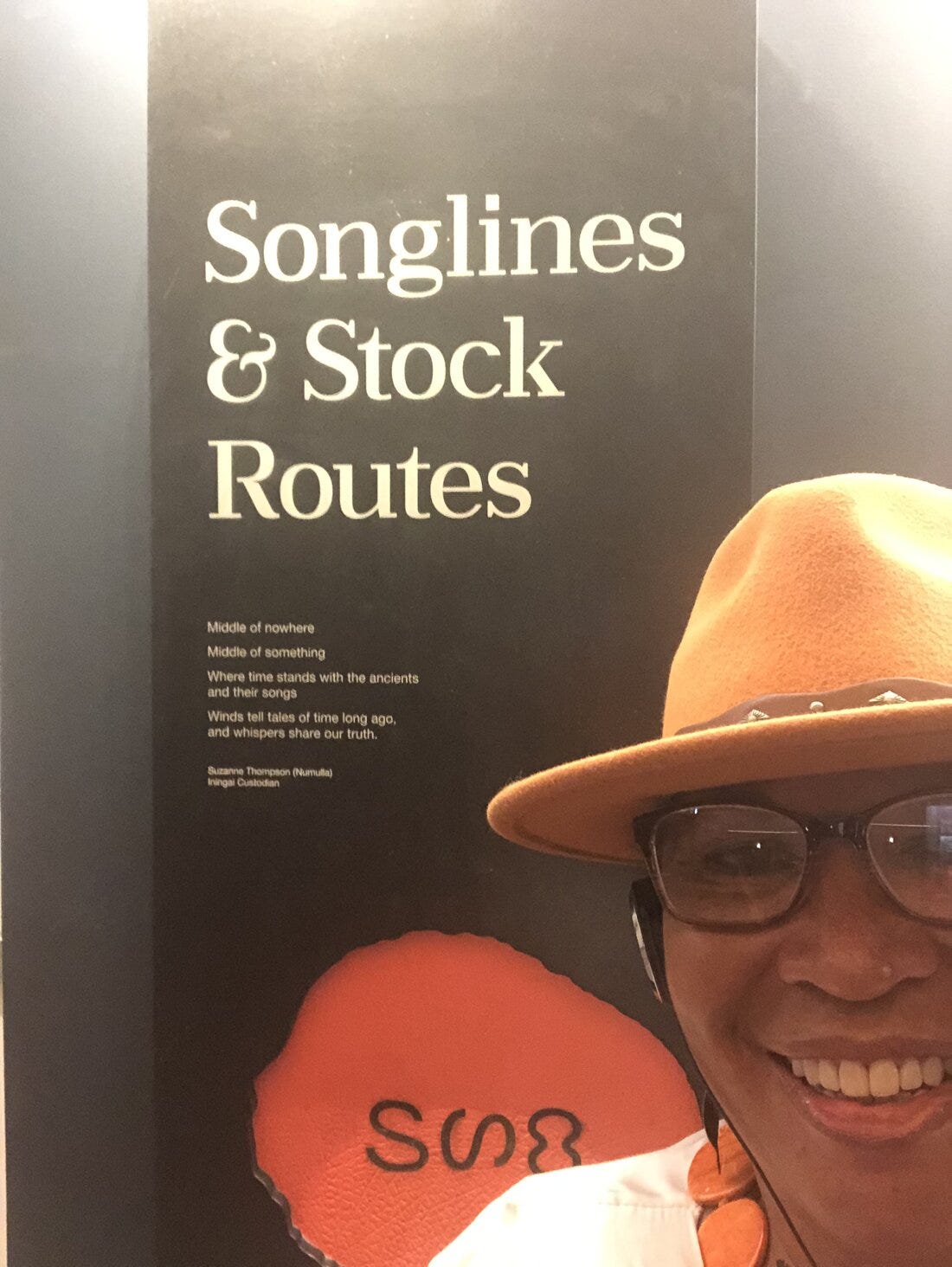
Today we meet renowned Barcaldine artist, cultural champion and Indigenous advocate Suzanne Thompson.
The power of Suzanne’s story is best understood by listening to it, hearing the beautiful lyrical way she continues the great oral storytelling tradition of First Nations people in Australia going back more than 60,000 years. I recommend making a pot of tea, clicking on the podcast link above, and sitting back to listen to Suzanne’s incredible story, of growing up on country, moving away, and returning decades later when her ancestors called to her to come back to Turraburra just outside Barcaldine.
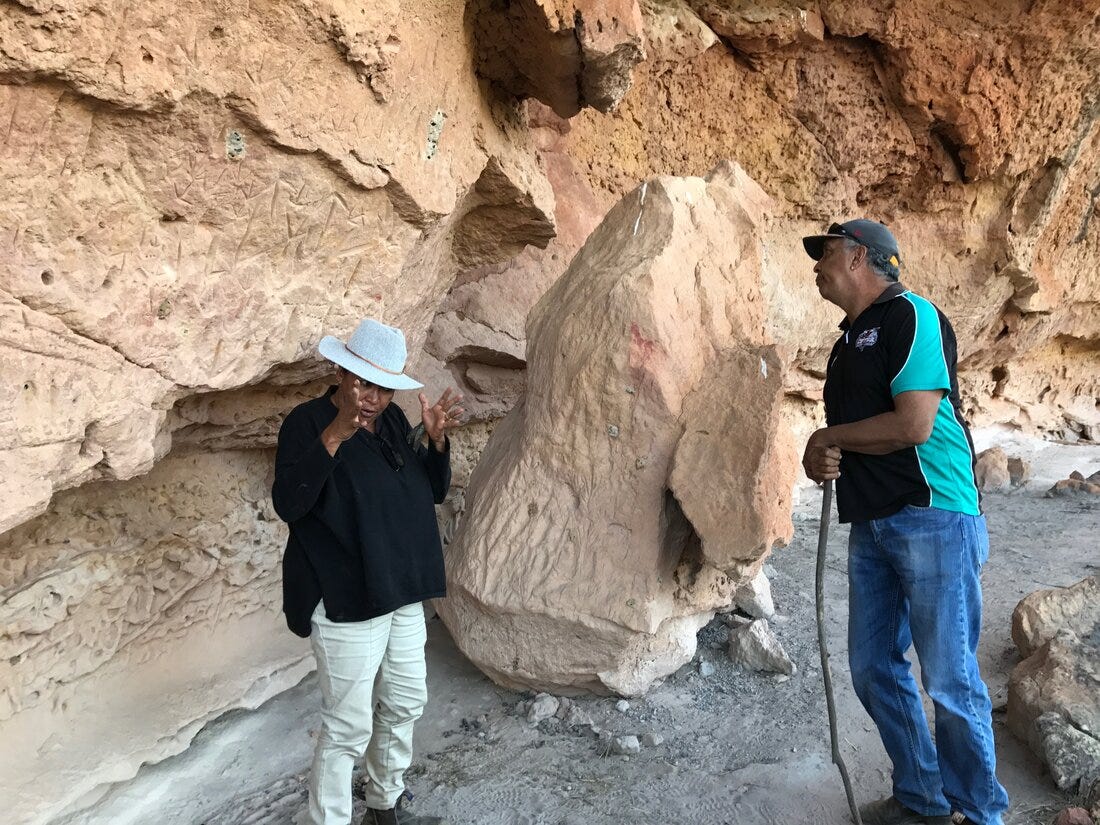
“It’s a good day today, and this is Iningai country that we sit on, but I also acknowledge my Kabi Wakka connections in my country, my Bidjara and my Karikara from Springsure area of my grandmother,” Suzanne says.
“Our story talks about its beginning and that story is the continuity of our law story. When you get to hear that in its context and witness it, it is a life changing, very profound experience of what you see. You can’t other than walk away without your life being changed.”
Suzanne was awarded a fellow of the Australian Academy of Technological Sciences and Engineering last year, in recognition of her cultural and scientific knowledge, and is a member of the Emissions Reduction Assurance Committee, which is responsible for Australia’s carbon credit scheme. She’s also a Director of the Indigenous Carbon Industry Network.
And while these prestigious awards are important and a great acknowledgement of her skills, they only capture a small part of the knowledge and wisdom she has gained, continues to gather, and passes on to others.
She says this was only something she realised at the presentation ceremony, when she was nervous about being with such an internationally respected group of scientists.
“My journey’s my journey, my lens is my journey, my story is my story, but having very strong cultural values and integrity I think reflects on the place I grew up in and where I was brought up by my Mum and Dad and my elders. Watching and witnessing that has been my foundation,” she says.
“They always said to me, ‘You can be anything you want to be. You want to be a brain surgeon, you can do that. All you got to do is ask how because your mind is curious and it can do that’.
“So to have that opportunity to be recognised with such a prestigious award with the Australian Academy of Technology, Science and Engineering ATSE—I’m still trying to figure out what that is and what benefit is it for me.
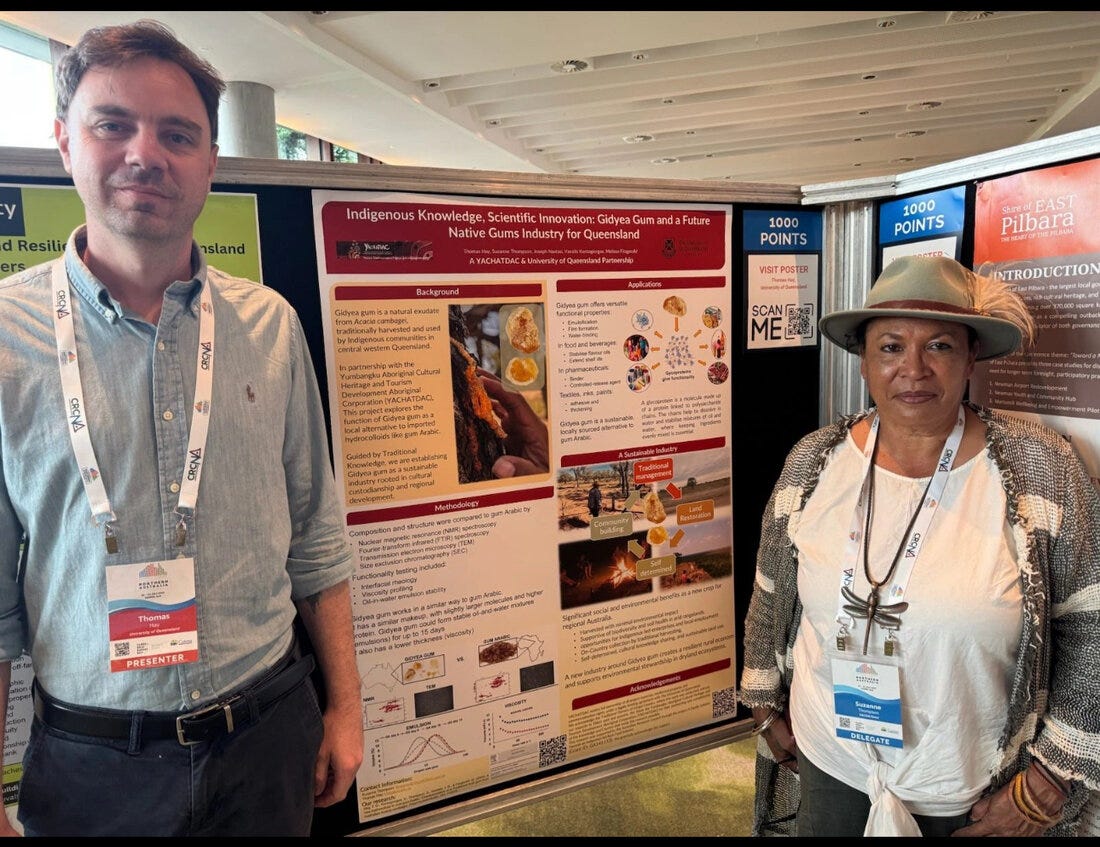
“To be with these esteemed scientists like the person that invented the bionic heart, the gentleman that created the glass that sits on our mobile phones to tap and swipe, Australia’s first female astronaut—to be in their presence and then to realise that when they asked me what my field was, firstly feeling imposter syndrome, there was so many mixed emotions. I felt I was very depressed. I was very anxious. I was very excited. I was everything.
“To now when I’m actually this year, I’ve been a judge on the National Indigenous Science and Innovation Award. I’m very, very honoured to be there because I have an expectation. So then you start to realise the impact and the influence you have.”
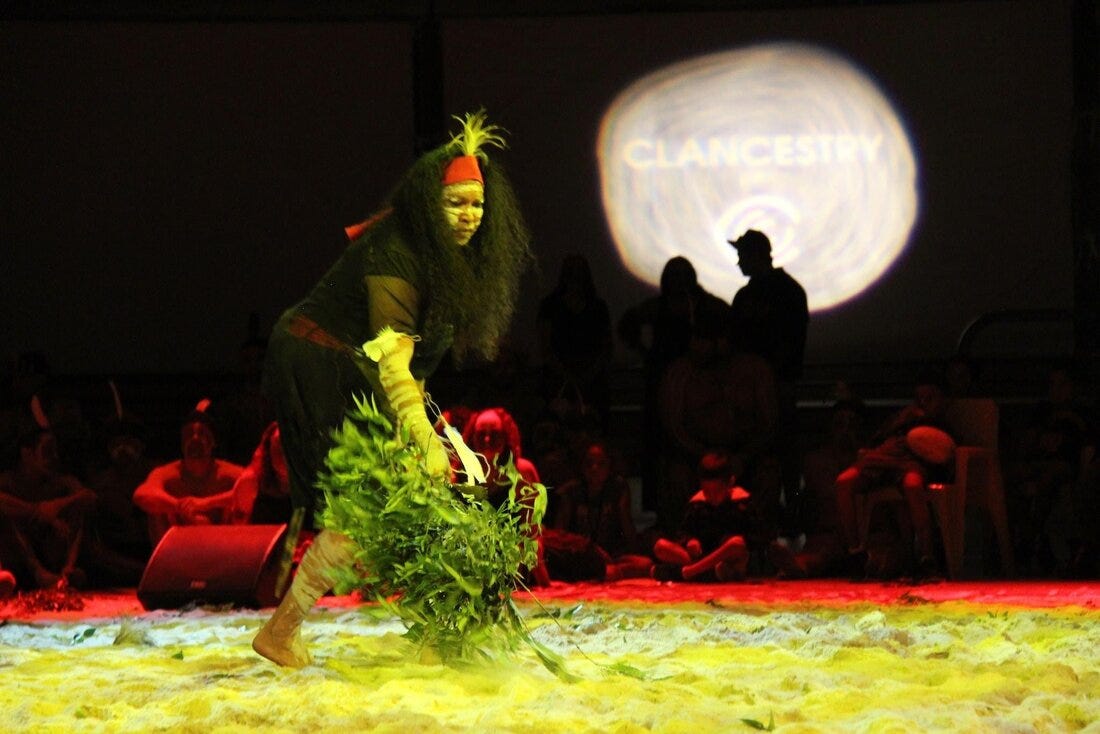
As Suzanne tells us on Streets of Your Town—her passion from a young age is to “walk in both worlds” building connections between Indigenous and non-Indigenous Australians. That includes sharing culture and First Nations history, and her encyclopaedic knowledge of her Country, including edible plants and their medicinal purposes.
It’s a path that has not always come easily to her, becoming a fierce advocate for Indigenous rights in response to the challenges life put in her way. Such as when she was evicted from her Brisbane home for no other reason than her landlord discovered she was Indigenous.
After 30 years in Brisbane and Queensland’s south-east working in government and community organisations, and always having her hairdressing and artistic skills to fall back on, Suzanne had a profound life changing moment.
“I went to bed one night and it was a Sunday night, and all my ancestors and my Dad come in my dream, and they lifted me up out of bed and we went flying and we went flying all out in country and I remembered they took me to all the places that I got taken to when I was little. I remembered feeling the breeze in my face,” she says.
“I smelt the air just everything, the sensories and everything was just so profound. I remembered reaching out. There was one part where I hovered in front of this giant iron bark tree. It was massive and I go, ‘I remember this and touching the bark on it.’ They said, ‘Come on now we’re going to go sit.’
“They said, ‘All right, we’re going to take you out now and show you.’ When we went out and left the area, there was not a tree, not an animal, not a blade of grass. Everything was gone and the land was barren. I looked and I went, ‘What the flippin heck are you showin me this for?’ They said, ‘Because you got to know what’s going to happen.’
“I go, ‘Why?’ They said, ‘Because you’re the one.’ `Well, what am I supposed to do with this? No one’s going to listen to me.’ ‘It doesn’t matter. You need to go home.’ ‘Well, when?’ ‘Now.’ I went,’Okay, what am I supposed to do?’
“They said ‘It doesn’t matter. In time, you will be okay and everybody will start to hear you.’
“So I woke up Monday morning and I said to Graham (Ambridge)—Grah, my husband—this was the dream. And I said, ‘I got to go home’. I was packed and gone Friday. It was that profound and that quick.
“But I had to follow that. And of course when I got home alone figuring it all out, I got to come home to my family home and my dad had left like crumbs for me to pick up. Because he was gone. He’d passed in 2003.
“And I’d sit there on the verandah at home alone and I’d be thinking to myself, ‘What am I home for? How am I supposed to do this?’
“And then I looked over and there’d be this pile of papers and I thought, ‘Oh, what’s that?’ And I picked up the pile of papers and I had a look. My father had left me all the GPS coordinates of all of our sites. I’m talking really profound stuff.
“When people pass they return in a way, and Dad returned. A tawny frogmouth would come and sit on the veranda rail. So you go through all this emotion and I remembered looking and going, ‘Oh Dad.’ And it was like he put the head down and I went, ‘Am I doing the right thing? Is this right? Am I doing the right thing?’
“It was almost like the head nodded and then flew away and I just went, ‘Righto, pick yourself up again, get back into it.’
In 2019 the not-for-profit organisation she founded—Yambangku Aboriginal Cultural Heritage and Tourism Development Aboriginal Corporation (YACHATDAC)—took over the running of the former cattle station from the Indigenous Land and Sea Corporation. Suzanne is now working on the next stage, making the property a centre for learning about Iningai culture, land regeneration and the complexities of Indigenous land management. All continuing the work of her parents and grandparents before her.
She has plans to expand tourism to Turraburra so more can see the story wall on an escarpment protecting an ancient gallery of rock art that explains the creation story of how the universe came to be. The cattle have now been removed after more than a century, the land is returning to what it always was, and the wildlife is coming back.
“So many opportunities and discoveries have happened from that point and that’s where now knowing, doing our new strategic flow and the strategic plan of all of the visions of our partnerships with the universities, establishing Turraburra Research Institute, looking at huge Commonwealth CRCs they’re called Commonwealth Cooperative Research, leading in innovation, leading in practise, in leading in all sorts of things, discoveries in bush medicine and bush plants,” she says.
“That’s why guesting on country works for us because people come out as guests and they feel more a part of it. They immerse themselves more.
“We have more of an awakening experience because I guarantee when you come to Turraburra and you have the experience and I say to everybody, Turraburra is the place where you will reawaken your children’s dreaming time because as babies, we could sense things and see things.
“You get to see stuff where you go, ‘Oh, it’s there. It’s actually been documented in stone. You can’t argue with that.’”
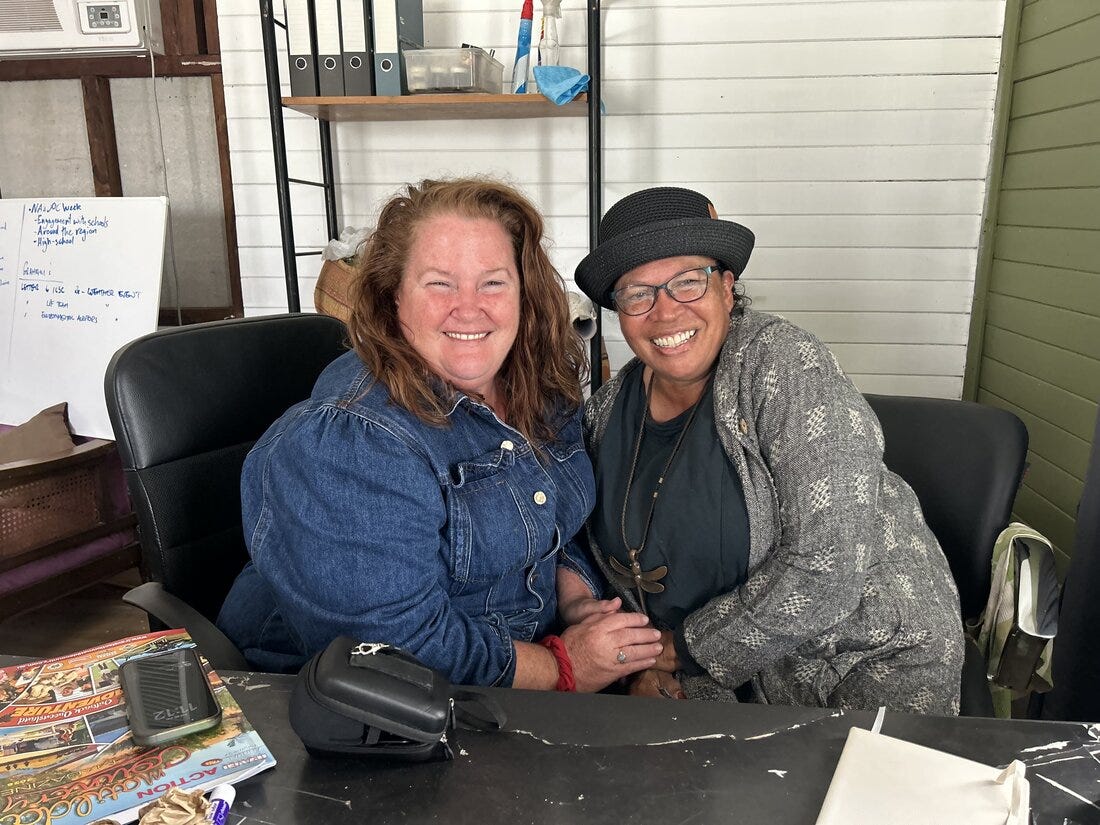
Thank you my ever supportive Streets of Your Towners for keeping me and Mildred the Cantankerous Kombi on the road and getting these stories that will now be kept in the State Library of Queensland collection for generations to come. As one of the librarians so kindly told me when I asked her why they bought the rights, she said that I had captured stories of Queenslanders that in a hundred years no-one would remember—what it was like to be a refugee, to be a struggling actor, or to trek into the Woodford Folk Festival. You can see how to access the State Library collection at the bottom of this previous newsletter!
So thank you all for making this possible!
Please consider taking a paid subscription to Streets of Your Town if you are as passionate about telling these stories in this age of AI as I am.
In an era when we are all craving human connection and it seems to be harder to find, you know you can listen to humans talking to humans—right here.
Love yas!
Nance