
Flying Doctor Aidan Fenoglio and his love for working for the RFDS
Hello my Wandering Journo tribe!
And now to another episode of my special Streets of Your Town—The Outback Project—series bringing the great characters and sounds of Australia’s bush to you from my recent casual 2600km round trip to Winton and back in Mildred my cantankerous kombi.
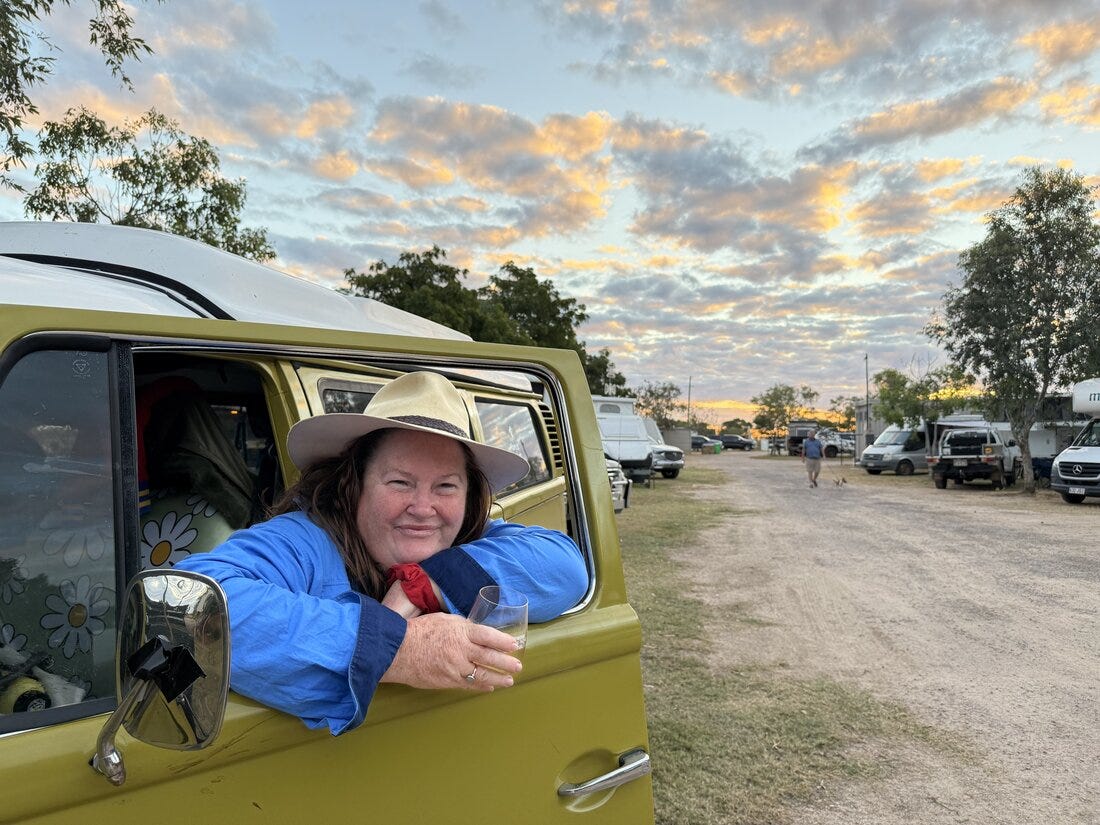
In all my years of reporting from outback Australia, one organisation has stood out to me from all others in all my travels, for having the respect and appreciation of everyone in the bush.
And that’s the Royal Flying Doctor Service.
The Royal Flying Doctor Service in Queensland operates 24 hours a day, every day of the year, doing aeromedical retrievals across the vast expanse of the state, and caring for more than 330,000 Australians each year.
As well as the dramatic plane rescues, the RFDS also delivers primary and preventative health care to some of the most remote areas in Australia, and indeed the world.
Today on Streets of Your Town we hear from Dr Aidan Fenoglio, who is one of the on-call doctors on the roster for the RFDS, based from Brisbane and Charleville.
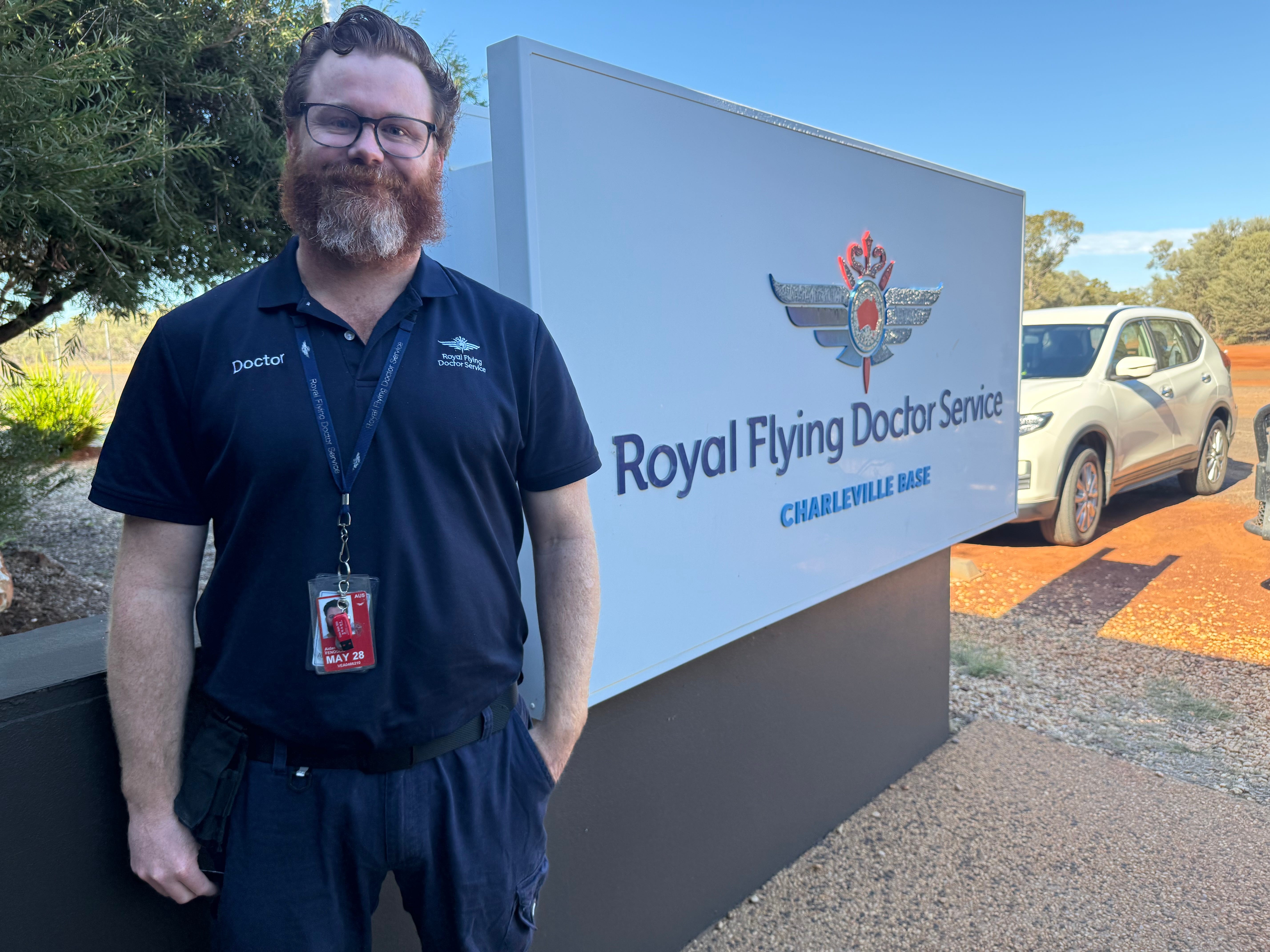
Dr Fenoglio gives us a glimpse into the life of an emergency doctor in one of the most pressured environments that you can practice in, from the back of an aeroplane.
“It’s unpredictable. Things change. We can have the most thought out plans, but they get thrown out the window at a moment’s notice if a phone call comes through,” he says.
“We’re on standby ready to respond at a moment’s notice. So we’re at base.
“We’re also responsible for helping those that are in rural remote locations who may not need air medical retrieval, but just might need to have a conversation or a discussion about their symptoms or concerns.
“At the same time, they’ve got medical chests scattered across a lot of our remote stations. We can have patients access those medical chests with our involvement and then decide whether or not the patient needs to be moved and how it’s best to move them to get to a healthcare environment. So we’re doing that as well as the aeromedical side of things, moving patients.”
The day before, our interview had to be rescheduled because Dr Fenoglio was flown out to a woman in labour who needed assistance.
“We try to avoid a delivery within the aircraft or flying at all costs,” he says.
“We don’t like doing things in flight. If we’re going to do things, we’ll do them on the ground, but everything is about risk management in this job as well.
“Fortunately yesterday, things went all to plan and we were able to transport the patient because she had higher healthcare needs and needed to be delivering in a safe environment. And we got her to that environment and she didn’t deliver in the meantime.”
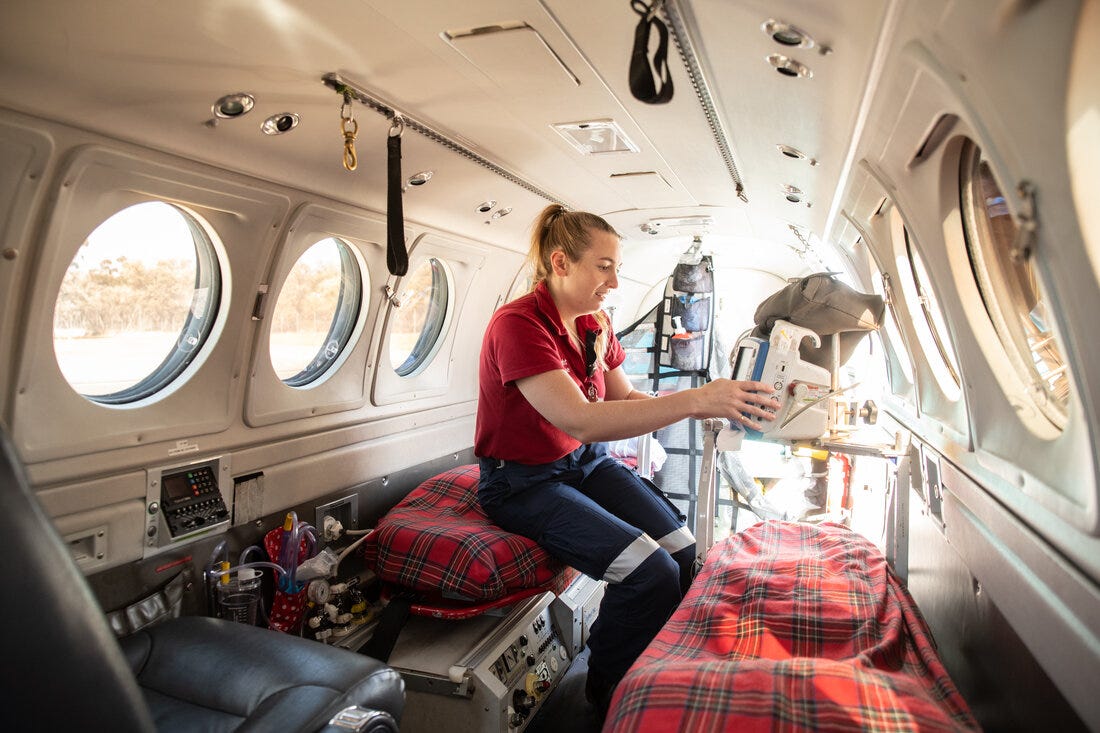
All RFDS aircraft are staffed with a pilot, flight nurse and a medical officer, and are fully pressurised and configured to resemble mini-intensive care units. They even have a stretcher loading system that is fully compatible with road ambulances.
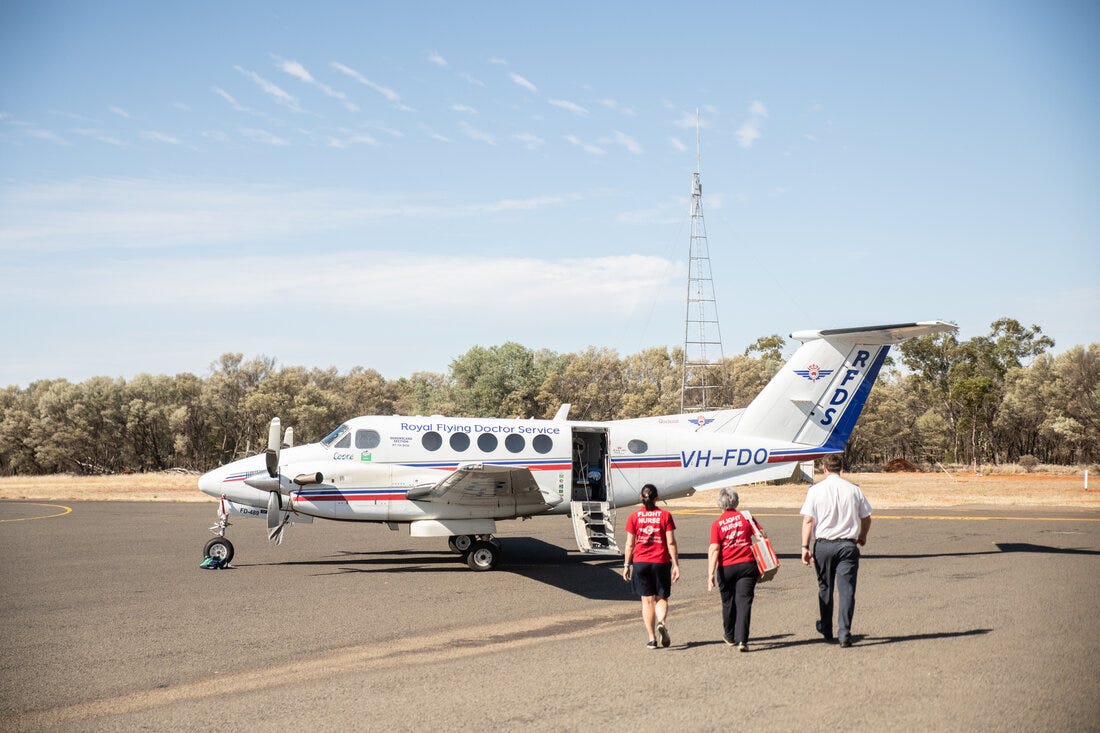
Dr Fenoglio says he thrives on the challenges of the job.
“We can sometimes have emergencies from behind Birdsville and the Simpson Desert and from point of phone call to contact could be six hours, and then to get to definitive care could be another 12 hours,” he says.
“That’s part of the fun of the job and we always think to ourselves that patients don’t go out there to get themselves into any medical mischief, but it is a privilege to be able to help them in their moment of need, but understanding that there is a disparity in the healthcare that can be provided initially and that delay to care, unlike if someone were to have that same episode and be located within Brisbane or Toowoomba.”
This Ingham boy from far-north Queensland is proud to return to the small country communities he loves and provide the service he is trained to do, sometimes over incredible distances.
“I have been flown to Cooktown on the Charleville aircraft previously. It’s very rare for that to happen, but yes, we get moved about a bit,” he says.
“Our staffing has dramatically increased because the aircraft has got much busier and we’ve now got a segregated model of care of having our primary healthcare doctors, which are our general practice doctors who are going out and providing outreach clinics. And then our air medical doctors, which are our critical care doctors, our flying ICU doctors.
“There are some docs that work across both rosters so that’s not discouraged, but appreciating it’s a very unique and separate skill set of both.
“We’ve now probably got, I think around 10 part-timers and most of us come out and do a week (from Charleville) every two months.”
Aidan Fenoglio started his training at JCU, after coming to medicine later in his life.
“I never really had a strong aspiration through my high school years to become a doctor, but I was fortunate enough to have the grades and back then James Cook University was only fresh in its journey of having a medical school.
“Once I got into medical school, I became very interested in rural medicine. I was around a lot of very good mentors and rural generalists, rural GPs and became aware of RFDS as an organisation. I was actually a John Flynn scholar with the RFDS as a medical student.
“So I’ve always had that affiliation with the organisation and then once I became a doctor and then a ‘grown up’ doctor with my sub-specialty training, it was only natural for me to gravitate back towards RFDS.”
The varied background of all the RFDS doctors’ training is also one of the services’ strengths, he says.
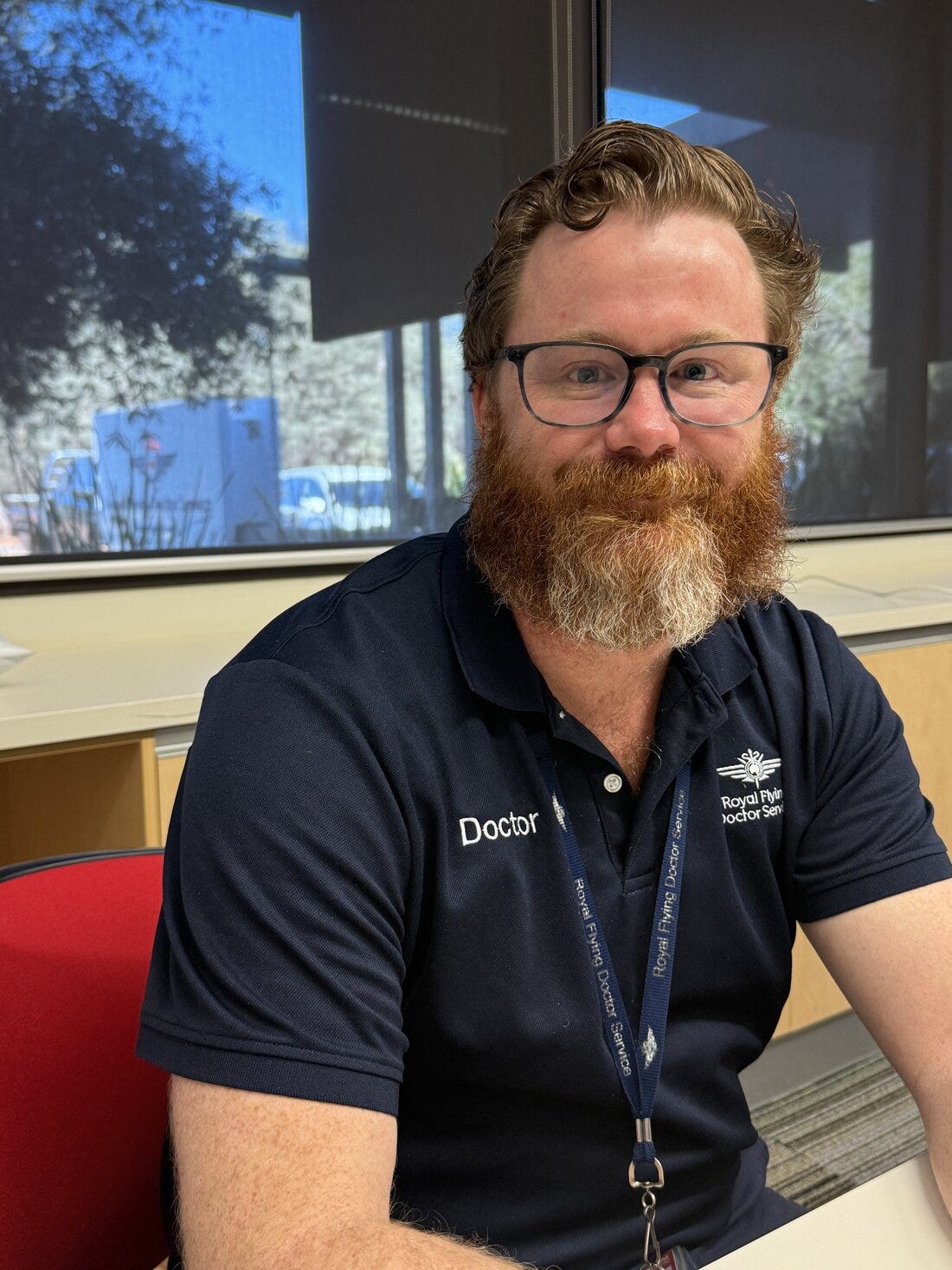
“My work in retrieval medicine is as a retrieval physician or specialist, but I’m by trade an emergency specialist. Having said that though, others that work within the Royal Flying Doctor Retrieval sphere might come from an intensive care background, an anaesthetic background, a rural generalist background and predominantly now it seems to be how the workforce is shifting as an emergency medicine specialty background.
“You acquire that skill set over time, but the actual letters after someone’s name can be very variable.”
He says callouts could involve anything from heart attacks, motorbike trauma, mustering issues, people wrestling with bees, or even more run of the mill medical emergencies like you see in the city but are made much more complex in a remote or rural setting.
“It sounds a bit odd, but I really do enjoy looking after critically unwell and sick patients. So I don’t want anyone to be unwell, but at the same time, if they are, I’m happy to be called and be able to assist,” Dr Fenoglio says.
“It’s what we’re trained to do and I think that having that buy-in from the community to the organisation and to be able to assist them in their time of need and for them to be truly a very thankful community as well, it’s a very special job that we do here.
“We work within a great team with our pilots, flight nurses and even our base and admin staff, they’re the gel or the glue that keeps us going and it’s a nice change away from that, we’ll say metropolitan healthcare system, which I also work within.
“It’s very different work. I feel very fortunate and blessed to be a part of the team here and I don’t see myself moving on anytime soon.”
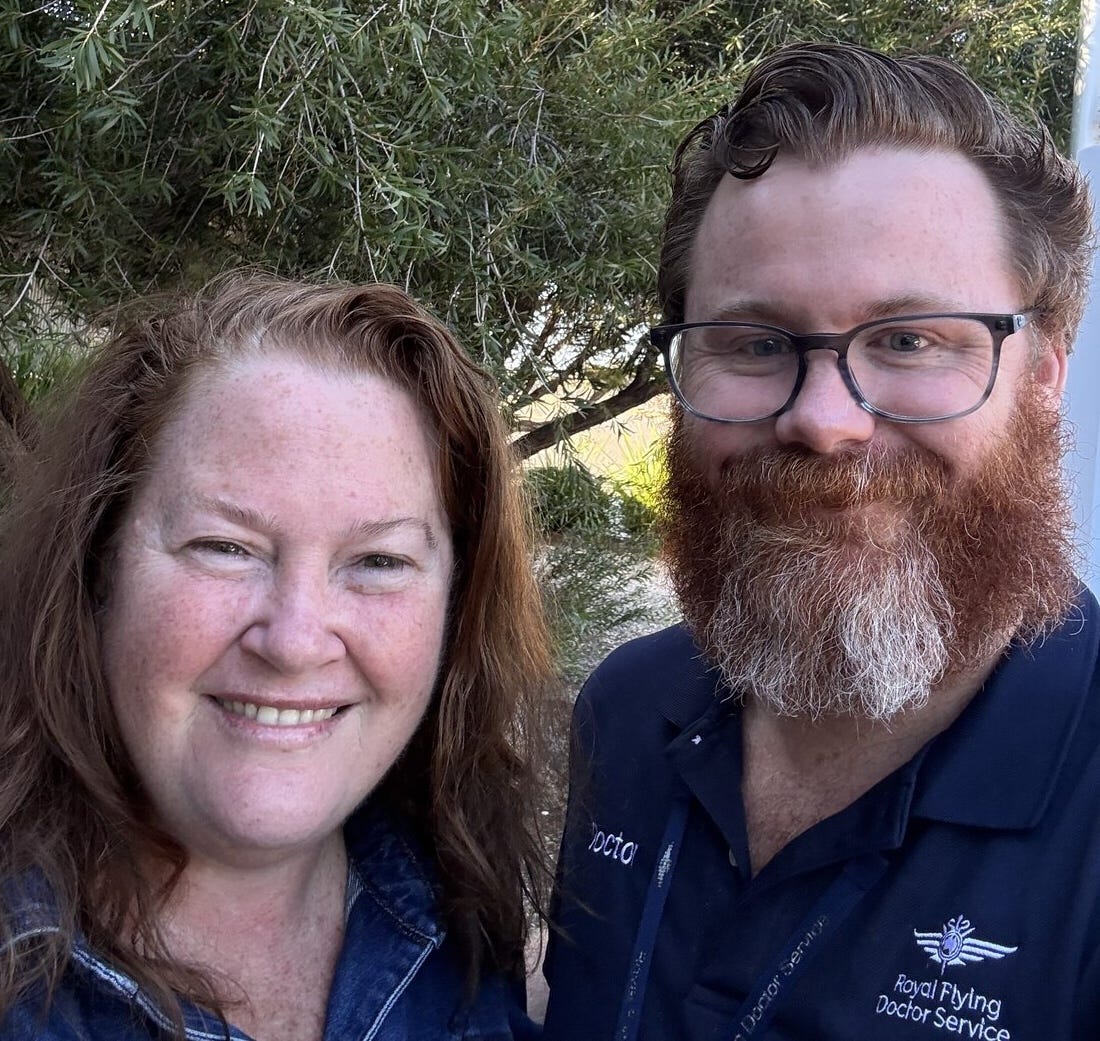
Big thanks to you my Wandering Journo tribe and your support filling the tank of Mildred my cantankerous kombi so I can go on these adventures and gather these stories! Because of you, I was able to also have this story published in the esteemed MJA Insight+ publication! Getting this important story on the work of the RFDS out to more people and increasing the understanding and knowledge of this uniquely Australian service, and what incredible people like Dr Aidan do to keep the outback as safe as possible.
So thank you all for making this possible!
Please consider taking a paid subscription to Streets of Your Town if you are as passionate about telling these stories in this age of AI as I am.
In an era when we are all craving human connection and it seems to be harder to find, you know you can listen to humans talking to humans—right here.
Love yas!
Nance